The Mediterranean is really two cruise regions in one sea. Itineraries split roughly at Italy: Western Mediterranean cruises sail the coasts of Spain, France and western Italy, while Eastern Mediterranean cruises head for Greece, Croatia, Turkey and the islands of the Aegean and Adriatic. Both are port-heavy, both are full of history, and both make a superb first cruise. But they feel very different once you are on the ground.
This guide compares the two side by side, covering ports, weather, crowds, pace, food and the best time to go, so you can choose the half that matches how you like to travel.
The Short Answer
Choose the Western Mediterranean if it is your first time in Europe, you love big cities, art and food, or you want famous names like Rome, Barcelona, Florence and the French Riviera. Choose the Eastern Mediterranean if you want island scenery, beaches, warm sea and ancient sites such as the Acropolis and Ephesus, or if you have already seen the western capitals. Many travellers do the West first and the East on their next cruise.
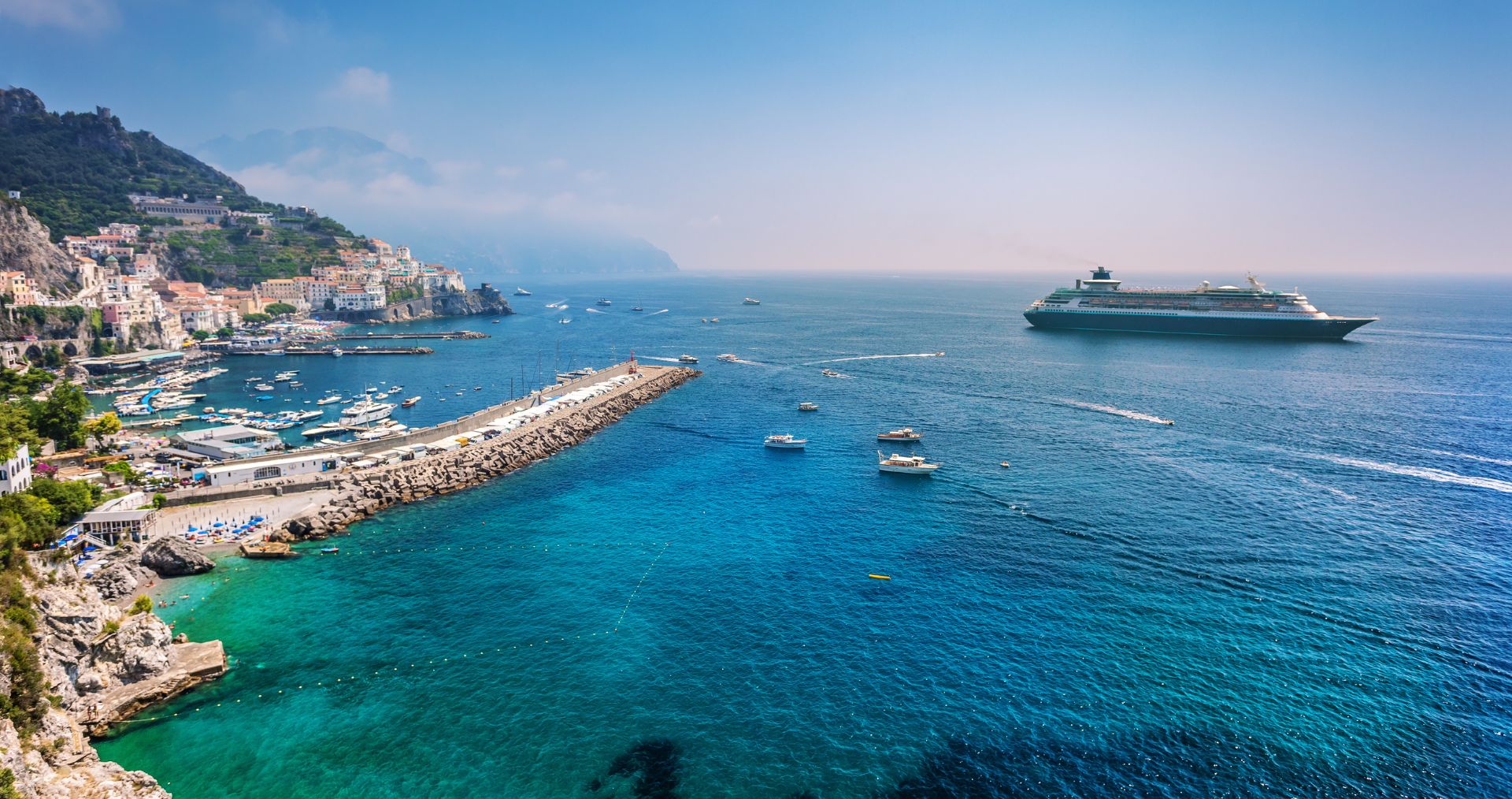
Eastern vs Western Mediterranean at a Glance
| Western Mediterranean | Eastern Mediterranean | |
|---|---|---|
| Main countries | Spain, France, Monaco, western Italy; sometimes Portugal, Gibraltar or Morocco | Greece, Croatia, Montenegro, Turkey, eastern Italy, Malta; sometimes Cyprus or Albania |
| Signature stops | Barcelona, Palma de Mallorca, Marseille, Nice and Villefranche, Monaco, Florence and Pisa, Rome, Naples | Athens, Santorini, Mykonos, Rhodes, Crete, Corfu, Dubrovnik, Kotor, Split, Ephesus, Istanbul, Venice |
| Common departure cities | Barcelona, Rome (Civitavecchia), Genoa, Marseille | Athens (Piraeus), Venice-area ports such as Trieste and Ravenna, Istanbul, Rome |
| Feel of the trip | Big-city culture, art museums, cathedrals, food markets | Islands, whitewashed villages, archaeology, beaches |
| Weather | Warm but more changeable; cooler evenings in spring and autumn | Hotter and drier in summer; warm sea well into autumn |
| Beaches | More rock and pebble beaches; city beaches in Barcelona and Nice | More sandy coves and swimming stops, especially in the Greek islands |
| Pace | Busy; several ports sit an hour or more from the main sights | Busy; more walkable port towns, but some islands use tender boats |
| Best for | First-timers, food and art lovers, families who like cities | Beach lovers, history buffs, couples, second-time Mediterranean cruisers |
What Is the Difference Between the Eastern and Western Mediterranean?
The difference is geography, and the travel experience that follows from it. Italy is the dividing line. Cruises west of the boot follow the coasts of Spain, France and Monaco, where the ports are gateways to famous cities. Cruises east of it weave through the Adriatic and Aegean, where the ports are islands and old walled towns.
Italy itself appears on both. A Western itinerary usually calls at Civitavecchia for Rome, Livorno for Florence and Pisa, and Naples for Pompeii and the Amalfi Coast. An Eastern itinerary is more likely to include Venice, Bari or a Sicilian port. Rome is a common crossover point: many Eastern sailings begin or end there, too.
Western Mediterranean Cruises: Cities, Art and Food
A Western Mediterranean cruise reads like a list of Europe’s greatest hits. Spend a day on Barcelona’s Las Ramblas and at the Sagrada Família, stroll Palma’s cathedral quarter in Mallorca, take in Provence from Marseille, and ride along the Riviera from Villefranche to Nice and Monaco. In Italy, it is the Colosseum and Vatican from Civitavecchia, the Duomo and Uffizi from Livorno, and Pompeii or the Amalfi Coast from Naples.
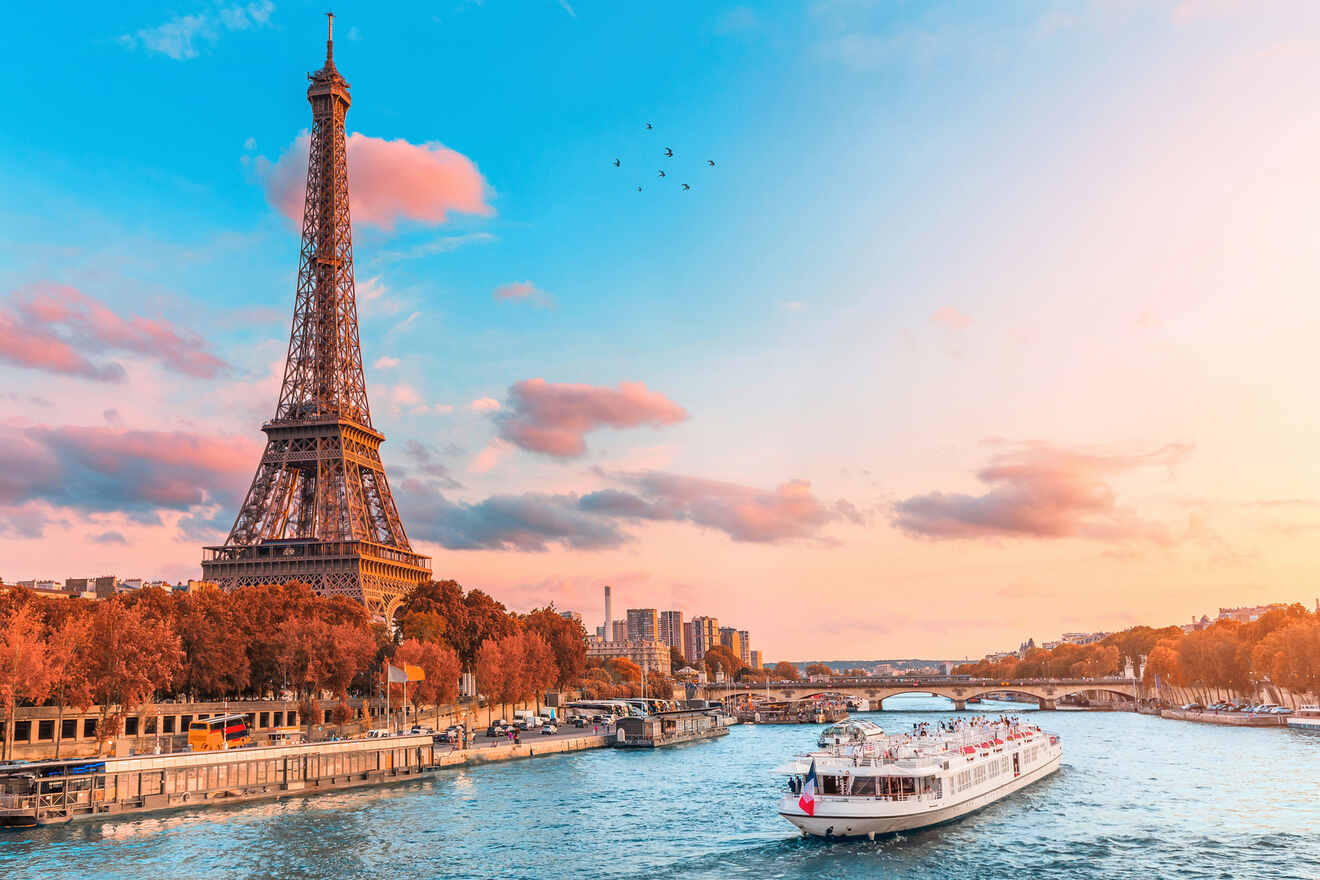
Who it suits
- First-time visitors to Europe who want to see the icons in one trip.
- Food and wine lovers: tapas in Spain, Provençal markets, Ligurian pesto, Tuscan wine country and Neapolitan pizza.
- Art and architecture fans: Gaudí, the Vatican Museums, the Uffizi and the Renaissance towns of Tuscany.
- Families with older children, who often prefer cities, castles and gelato to long days at archaeological sites.
What to know before you book
Several Western ports are gateways rather than destinations. Civitavecchia is a drive of roughly an hour and a half from central Rome, and Livorno is a similar distance from Florence. That makes for long port days, and it is where a well-planned private guide or ship excursion earns its keep, so you are not watching the clock on the way back to the ship. Spain also has strong pre- and post-cruise options: an extra night or two in Barcelona or Rome is easy to add and helps with jet lag.
Eastern Mediterranean Cruises: Islands, Ancient Sites and Sea Views
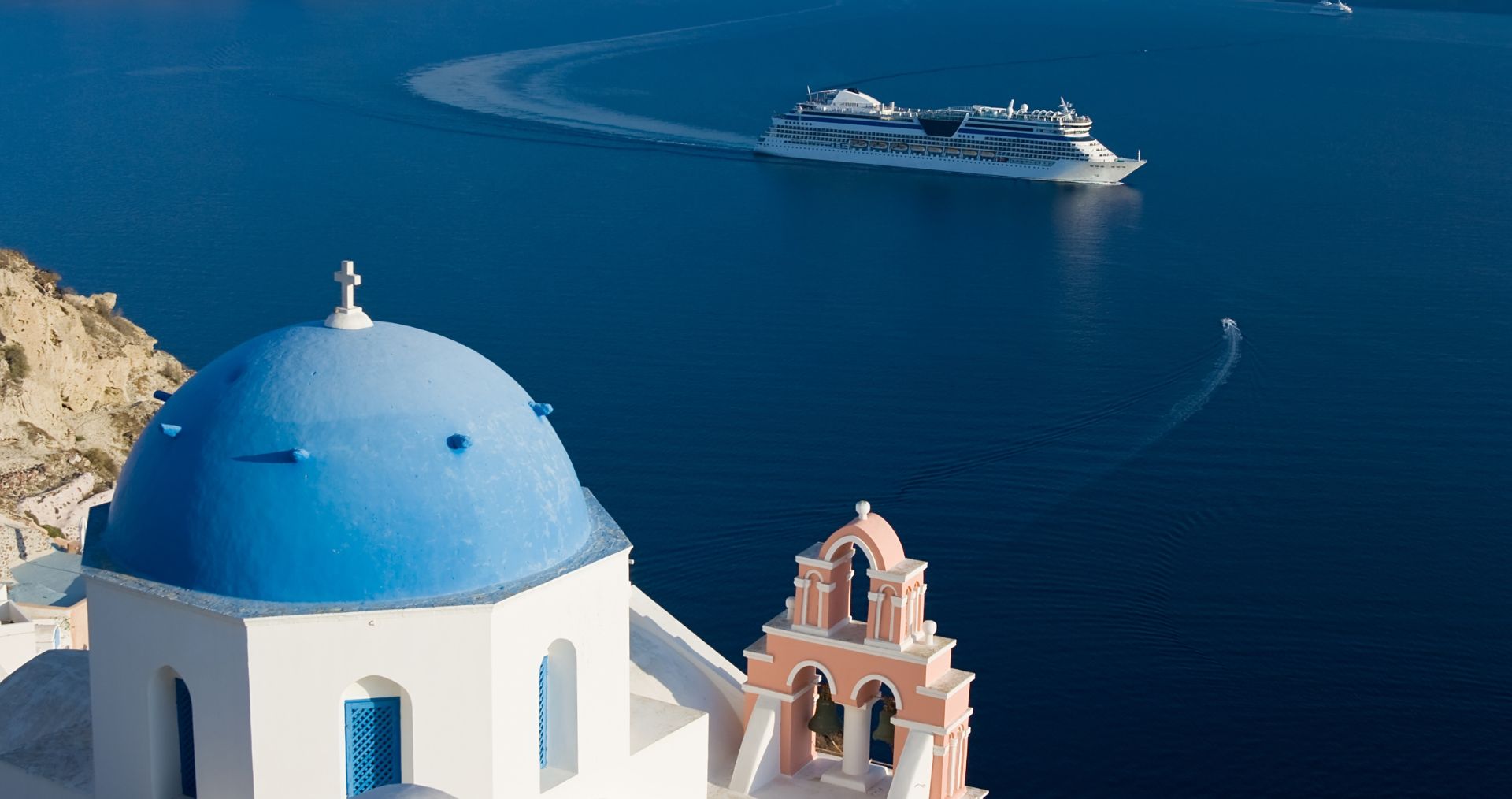
An Eastern Mediterranean cruise trades big cities for island scenery and older history. Picture sunset over Santorini’s caldera, the windmills of Mykonos, the medieval walls of Dubrovnik and Rhodes, the fjord-like Bay of Kotor in Montenegro, and the ancient city of Ephesus near Kuşadası in Turkey. Athens is often the start or finish, which puts the Acropolis on your list too.
Who it suits
- Beach and sunshine lovers: warmer, sunnier summers and more swimming stops.
- History buffs: ancient Greek and Roman sites, Byzantine churches and Venetian fortresses.
- Couples and honeymooners: island sunsets and romantic harbour towns. See our Greece travel guide and Greek island hopping guide.
- Second-time Mediterranean cruisers who have already seen Rome and Barcelona.
What to know before you book
Port towns in the East are often right at the pier, so you can walk into Dubrovnik’s old town or Kotor without a long transfer. Some islands, including Santorini, use tender boats to ferry passengers ashore, which can mean queues at busy times. Popular stops also manage cruise numbers more tightly than they once did. Dubrovnik limits how many ships call each day, Santorini has introduced a fee for cruise visitors, and Venice has moved large ships out of its historic centre, so many “Venice” sailings now use nearby ports. Itineraries change from year to year, so check exactly where your ship docks.
Best Time to Take a Mediterranean Cruise
The main Mediterranean cruise season runs from spring to autumn. The right month depends on whether you want heat, swimming or space.
| Season | Western Mediterranean | Eastern Mediterranean |
|---|---|---|
| Spring (April–May) | Mild weather, blossoms, fewer crowds; good for city sightseeing | Pleasant sightseeing weather; sea still cool for swimming |
| Summer (June–August) | Hot inland cities, busiest ports, school-holiday crowds | Hottest and sunniest; peak crowds in Santorini and Mykonos; the meltemi wind can be strong in the Aegean in mid-summer |
| Autumn (September–October) | Warm days, harvest season, thinner crowds | Often the sweet spot: warm sea, calmer islands, softer light |
| Winter (November–March) | A limited number of sailings, cooler and quieter, good for cities | Very few sailings; many island businesses close for the season |
For most travellers, May, June, September and early October give the best balance of weather and crowds on either route. If swimming matters, lean toward late summer or early autumn in the East, when the sea has had all summer to warm up. For more detail by country, see the best-time guides for Greece, Italy, Croatia and Spain.
Crowds, Port Days and Pace
Neither half of the Mediterranean is a “lie by the pool” cruise. Most itineraries have a new port almost every day, so it helps to plan your energy. A few practical points:
- Mix big days with easy ones. Pair a full day in Rome or Florence with a lighter day in a walkable port such as Villefranche or Kotor.
- Go early or late at hotspots. Santorini’s cliff-top villages and Dubrovnik’s walls are calmest early in the morning or after the day-trippers leave.
- Watch the “all aboard” time. Gateway ports with long transfers need a buffer for traffic. Guided excursions sold by the ship wait for late-running groups, but independent tours do not.
- Check for tender ports. Tender days mean timed tickets to go ashore, so priority tendering or an early excursion makes a real difference.
Food and Wine: West vs East
Western Mediterranean: Catalan seafood and tapas in Barcelona, bouillabaisse in Marseille, socca in Nice, pesto and focaccia on the Ligurian coast, Chianti and Brunello in Tuscany, and pizza in its home city of Naples.
Eastern Mediterranean: Greek mezze and grilled octopus by the water, Santorini’s volcanic Assyrtiko wines, Dalmatian seafood and Croatian olive oil, Turkish meze and coffee, and Venetian cicchetti if your cruise starts in the Venice area.
If food is your priority, a smaller ship with longer port stays, or a pre-cruise night in a food city, makes room for a proper long lunch ashore rather than a hurried bite.
Can You Combine the Eastern and Western Mediterranean?
Yes. There are two common ways:
- A longer “Grand Mediterranean” sailing that crosses from Spain or Italy to Greece and Turkey in one voyage. These run longer than a typical week and suit travellers with more time.
- Back-to-back cruises on the same ship, where one Western sailing ends in a port such as Rome and an Eastern sailing begins there. You often keep the same cabin.
Combining the two works best if you can spare two weeks or more and want to avoid two long-haul flights from the US.
Ship Size Matters in the Mediterranean
The ship you choose changes the cruise as much as the route does. Large ships offer more dining, entertainment and family facilities, but they dock at the main commercial ports and arrive with many fellow passengers. Small and luxury ships can reach harbours big ships cannot, such as Portofino, Hvar, Monemvasia or the smaller Greek islands. They often stay later into the evening and sometimes overnight in ports. If your heart is set on quieter islands or more time ashore, a smaller ship may matter more than which half of the Mediterranean you pick.
Sample Week-Long Routes
Exact ports change by cruise line and season, but a typical week on each route looks something like this. Use it to picture the rhythm of the trip, not as a fixed schedule.
A typical Western Mediterranean week (round trip from Barcelona)
| Stop | What a port day might look like |
|---|---|
| Barcelona, Spain | Embark after a night or two in the city: Gaudí, the Gothic Quarter and the Boqueria market |
| Palma de Mallorca, Spain | The cathedral, the old town lanes, or a drive into the island’s mountain villages |
| At sea or Provence (Marseille), France | Lavender country, Aix-en-Provence or the Calanques coastline |
| Villefranche or Nice, France | Old Nice, Èze village and an afternoon in Monaco |
| Livorno, Italy | Florence’s Duomo and Uffizi, Pisa, or a Tuscan winery lunch |
| Civitavecchia (Rome), Italy | The Colosseum and Forum, or the Vatican Museums with a timed entry |
| Naples, Italy | Pompeii, the Amalfi Coast or Capri, then the sail back to Barcelona |
A typical Eastern Mediterranean week (round trip from Athens)
| Stop | What a port day might look like |
|---|---|
| Athens (Piraeus), Greece | Embark after seeing the Acropolis, the Plaka and the Acropolis Museum |
| Mykonos, Greece | Little Venice, the windmills and a beach afternoon |
| Kuşadası, Turkey | The ancient city of Ephesus and the Terrace Houses |
| Rhodes, Greece | The medieval walled town, or Lindos and its acropolis |
| Santorini, Greece | Oia and Fira along the caldera rim, a winery visit or a sunset sail |
| Crete or a day at sea | The Minoan palace at Knossos, or a slow day on board |
| Return to Athens | Disembark, or add a few nights on an island before flying home |
Adriatic-focused Eastern itineraries swap some Greek islands for Dubrovnik, Split, Kotor and Corfu, often starting from a port near Venice. They suit travellers who want old walled towns and dramatic coastline more than beaches.
Getting There From the US
Rome, Barcelona and Athens are the easiest embarkation cities to reach from the US, with seasonal nonstop flights from several major hubs and plenty of one-stop connections. Arriving at least a day before departure is the safest plan: a delayed flight on embarkation day is one of the most common ways a cruise starts badly. A night or two before the cruise also gives you time to see Rome, Barcelona or Athens properly rather than from a transfer coach.
How a Travel Advisor Helps You Choose
Picking a route is only the first decision. The cruise line, ship size, cabin location, excursions and pre- and post-cruise hotels shape the trip just as much. A Travel Byrds advisor compares sailings across cruise lines, plans shore days around what you actually want to see, and arranges the flights and hotel nights on either side. They also stay on hand if plans change while you are travelling. When you are ready to compare sailings, start with our Mediterranean cruise planning page or book a free consultation.
Thinking about a slower, smaller-ship alternative? Read our guide to river cruises vs ocean cruises or explore European river cruises.
FAQ
Which is better, an Eastern or Western Mediterranean cruise?
Neither is better overall; they suit different travellers. The Western Mediterranean is best for first-timers who want famous cities, art and food in Spain, France and Italy. The Eastern Mediterranean is best for island scenery, beaches and ancient sites in Greece, Croatia and Turkey. Many people cruise the West first and the East next.
Which Mediterranean cruise is best for first-timers?
A Western Mediterranean cruise is usually the easiest first choice. It visits world-famous cities such as Barcelona, Rome and Florence, starts from well-connected airports, and gives a broad introduction to European history, art and food. If you mainly want beaches and island views instead, the Eastern route is equally good.
What countries does an Eastern Mediterranean cruise visit?
Eastern Mediterranean cruises most often visit Greece, Croatia, Montenegro, Turkey and eastern Italy, including the Venice area. Some itineraries add Malta, Albania or Cyprus, and longer sailings may include Israel or Egypt. Popular stops include Athens, Santorini, Mykonos, Rhodes, Dubrovnik, Kotor and Ephesus.
What countries does a Western Mediterranean cruise visit?
Western Mediterranean cruises focus on Spain, France, Monaco and western Italy. Typical stops include Barcelona, Palma de Mallorca, Marseille, Nice or Villefranche, Monaco, Livorno for Florence, Civitavecchia for Rome and Naples. Some itineraries add Portugal, Gibraltar or Morocco.
When is the best time to cruise the Mediterranean?
May, June, September and early October offer the best mix of warm weather and smaller crowds. July and August are hottest and busiest, especially in the Greek islands. For swimming in the Eastern Mediterranean, late summer and early autumn are best because the sea is at its warmest.
Is the Eastern Mediterranean more crowded than the Western?
Both get busy in summer, but crowding feels different. In the East, small islands such as Santorini and walled towns like Dubrovnik can feel packed when several ships arrive. In the West, crowds are spread across large cities. Choosing shoulder months and early excursions helps on either route.
Can you see both the Eastern and Western Mediterranean on one cruise?
Yes. Longer “Grand Mediterranean” itineraries sail from Spain or Italy across to Greece and Turkey in one voyage. You can also book back-to-back cruises on the same ship, with one sailing ending where the next begins, often in Rome. This works best with two weeks or more.
Do I need a travel agent to book a Mediterranean cruise?
You don’t need one, but an advisor helps you compare cruise lines and ship sizes, choose the right cabin, plan shore days around long transfers and arrange flights and hotel nights. Travel Byrds advisors also support you during the trip if flights or plans change.