Short answer: GREEN x EXPO 2027, officially the International Horticultural Expo 2027, Yokohama, runs from March 19 to September 26, 2027, at the former Kamiseya Communication Facility in Yokohama. It is an outdoor festival of gardens, flowers and green technology on a site of roughly 100 hectares, built around the theme Scenery of the Future for Happiness. Visitors need a ticket with a booked date and entry time, and because there is no station at the site, most people arrive by shuttle bus from nearby stations. Yokohama is about an hour from central Tokyo, so it fits easily into a wider Japan trip.
At a glance
- When: March 19 to September 26, 2027 (192 days).
- Where: the former Kamiseya Communication Facility in Seya and Asahi wards, Yokohama.
- Theme: Scenery of the Future for Happiness.
- Size: about 100 hectares, with roughly 80 hectares for the main event area.
- Flowers: the organisers plan about ten million flowers and plants.
- Spring highlight: about 600 cherry trees of around 40 varieties, expected in bloom when the Expo opens.
- Getting in: a ticket with a reserved date and entry time, and shuttle buses from nearby stations.
What GREEN x EXPO 2027 Is
GREEN x EXPO 2027 is an international horticultural exposition, recognised at the top tier by the international horticultural association. It is Japan’s first expo of this class in 37 years, since the 1990 expo in Osaka. The idea is to show how flowers, plants and green spaces can make cities happier, healthier and more sustainable.
The site is a former U.S. military communications facility, which means a large, flat, open landscape that is being transformed into gardens. After the Expo, the area is meant to become a long-term park, so many of the plantings, including the cherry trees, are designed to last.
What to See and Do
| Highlight | What to expect |
|---|---|
| Main gardens | Large themed gardens, with colorful flower displays that change through the season |
| Cherry blossom opening | About 600 cherry trees of roughly 40 varieties, timed to bloom at the start of the Expo |
| National and international gardens | Countries and organisations show gardens and horticultural ideas |
| Themed villages | Areas that group exhibits and experiences around different themes |
| Green technology and city ideas | Demonstrations of sustainable design, from urban greenery to new ways to grow food |
| Seasonal events | Festivals, performances and food that follow the Japanese calendar |
The organisers plan the displays around the traditional Japanese seasonal calendar, so the site looks different from spring to summer to early autumn. Details change, so check the official programme for the weeks you plan to visit.
The Best Time to Visit
| Period | What to expect | Good to know |
|---|---|---|
| Late March to mid April | Cherry blossoms at the opening, cool air and spring flowers | The most photogenic and the busiest, especially on weekends and during Golden Week |
| Late April to early May | Spring blooms and mild weather, with Golden Week crowds at the start of May | Book far ahead for Golden Week travel |
| Late May to June | Roses and early-summer flowers, with warmer days | The rainy season usually begins in June, so carry a compact umbrella |
| July and August | Hot, humid summer with strong sun | Go early, bring water and take shade breaks |
| September | Late summer into early autumn, with typhoon season risk | Closing weeks can be busy, so book your entry time early |
If you want flowers and comfortable weather, aim for April, May or the first half of June. If you are building a Japan trip around other events, such as Kyoto’s Gion Matsuri in July, plan around the heat.
Tickets and Entry
Admission tickets are sold through the official ticket website and through authorised ticket agencies and travel companies. Every ticket requires you to register a date and an entry time, so it pays to book ahead for busy periods. Ticket types and rules can change, so check the official page for what applies to your dates and age group. A separate booking is needed for shuttle buses and parking.
Getting to the Expo from Tokyo and Yokohama
The site sits in western Yokohama, away from the main tourist districts, and it has no station of its own. Most visitors take a train to a nearby station and then use a shuttle bus to the venue. Official shuttle buses run from designated stations, and the organisers have a booking system for shuttles and for parking.
- From Tokyo. Take a train to Yokohama or a station near the site, then a shuttle bus. Allow extra time, because the total journey is longer than the map suggests.
- From Yokohama station. The Expo is in a different part of the city from Minato Mirai and the harbor, so plan transport rather than walking.
- By car. A parking reservation system is available, but public transport and shuttles are usually the easiest option.
- Plan a buffer. Shuttle queues build up at opening and closing times, so avoid tight connections.
Check the official access page for the current list of shuttle stations, schedules and booking rules, which will be updated before the opening.
Where to Stay

- Yokohama (Minato Mirai and the station area). Waterfront views, shopping and good dining, with direct trains to Tokyo.
- Shin-Yokohama. Next to the bullet train station, convenient for Kyoto and Osaka.
- Central Tokyo. Shinjuku, Shibuya or Shinagawa, if you want a Tokyo base and are happy to commute.
- Kamakura or Enoshima. Beach and temple towns, a little farther out.
- Near the site. Limited, but practical for early entry.
Yokohama is easy to combine with Tokyo. Many visitors stay in Yokohama for two nights and in Tokyo for the rest of the trip, so you only change hotels once.
What to Do in Yokohama
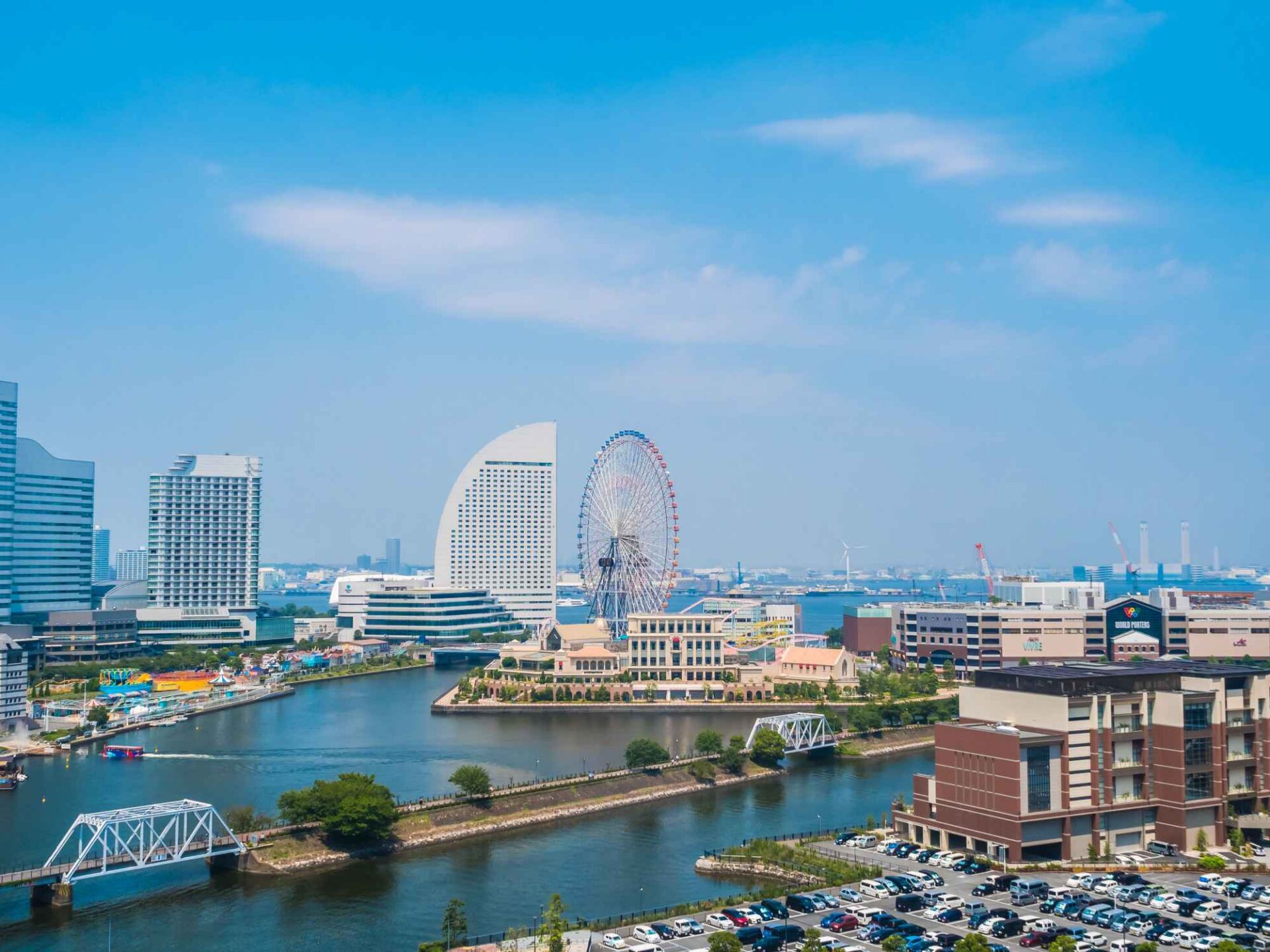
- Minato Mirai. The harbor district with Cosmo Clock 21 and the Landmark Tower.
- Yokohama Chinatown. The largest Chinatown in Japan, with dozens of restaurants and snacks.
- Yamashita Park and the Red Brick Warehouse. Waterfront strolls and shops.
- Sankeien Garden. A traditional garden with historic buildings and seasonal flowers.
- The Cup Noodles Museum. A fun stop that is popular with families.
- Kamakura. A day trip to the Great Buddha and seaside temples.
Building a Bigger Japan Trip
Japan is easy to explore in a loop, and a spring or summer expo is a good reason to go. Here are common add-ons.
- Tokyo. Neighborhoods, food, shopping and day trips to Nikko or Hakone.
- Hakone and Mount Fuji. Hot springs and mountain views, about 90 minutes from Yokohama.
- Kyoto and Nara. Temples, geisha districts and gardens, a short bullet train from Shin-Yokohama.
- Osaka. Street food, castles and nightlife.
- Hiroshima and Miyajima. History and a floating shrine.
- Kanazawa and the Japan Alps. Gardens, samurai districts and mountain villages.
For a deeper guide to choosing help for a trip like this, read our article on how to choose the right Japan travel agent.
A Sample 9-Day Trip
- Day 1: Arrive in Tokyo. Rest and take an evening walk.
- Day 2: Tokyo. A neighborhood day with a temple, a market and a quiet dinner.
- Day 3: The Expo. Take a shuttle from your station and spend the day in the gardens.
- Day 4: Yokohama. Chinatown, the harbor and Sankeien Garden.
- Day 5: Hakone. Hot springs and views of Fuji, if the weather allows.
- Day 6: Bullet train to Kyoto. Settle in and visit a temple at sunset.
- Day 7: Kyoto. Gardens, shrines and the old Gion district.
- Day 8: Nara or Osaka. A day trip to see deer and giant Buddha, or eat your way through Osaka.
- Day 9: Depart. Fly home from Osaka or return to Tokyo.
What to Pack
- Comfortable walking shoes. The site is large and mostly outdoors.
- Layers. Spring mornings are cool and afternoons warm up.
- Rain gear. A compact umbrella or light rain jacket for June and September.
- Sun protection and a hat. Shade can be limited in a garden landscape.
- A refillable water bottle and a small towel for summer visits.
- A portable battery. Your phone is likely to be your ticket and map.
Entry Requirements and Practical Notes
- Entry. U.S. citizens can usually visit Japan without a visa for short tourist stays. Confirm current rules on the official Japanese government sources and register for any digital arrival forms.
- Money. Cards are accepted more widely than before, but carry some yen for small shops and temples.
- Language. English signs are common in major cities and at big events. A translation app helps.
- Etiquette. Queue politely, keep your voice low on trains and carry your trash with you until you find a bin.
- Time zone. Japan Standard Time, with no daylight saving.
- Typhoon season. August and September can bring storms, so keep flexible plans.
First-Timer Mistakes to Avoid
- Skipping the entry time booking. Tickets require a date and entry time.
- Underestimating the journey. Allow extra time for the train and shuttle.
- Going in the midday heat. In summer, plan a morning visit and an indoor break.
- Cramming too much into one day. The site is big, so choose a few gardens and enjoy them.
- Forgetting rain gear in June.
Why Japan Hosts a Horticultural Expo
Japan has one of the world’s richest garden traditions, from Zen temple gardens in Kyoto to the seasonal flower festivals found in almost every town. Yokohama itself has long been a gateway for horticulture. After its port opened in 1859, it became the point through which flowers and plants moved in and out of the country. The last expo of this top class in Japan was the International Garden and Greenery Exposition in Osaka in 1990, so GREEN x EXPO 2027 is a once-in-a-generation chance to see that tradition on a grand scale.
Eating at the Expo and in Yokohama
Japan is a food destination, and an expo day is no exception. Expect a mix of food stalls, cafes and seasonal specialties, often tied to the flowers and the time of year. In Yokohama itself, there are a few dishes to look for.
- Chinatown dumplings and steamed buns. Good for a snack-style lunch.
- Gyoza and ramen. Yokohama has the Shin-Yokohama Ramen Museum and many local shops.
- Seafood from the Pacific. Fresh sushi and grilled fish.
- Seasonal sweets. Sakura-flavored treats in spring and matcha desserts through the year.
- Convenience store food. A reliable and surprisingly good choice for a quick bite.
Tips for Photographers and Flower Lovers
- Go early or late. Soft light flatters flowers and thins the crowds.
- Bring a macro or phone close-up mode. Details make the best flower photos.
- Check the bloom calendar. The organisers will publish seasonal highlights, so plan around what you want to see.
- Respect the plants. Stay on paths and never pick flowers.
- Watch for the wind. Cherry petals fall quickly after a windy day, so a few days can change the scene.
Families, Seniors and Accessibility
A garden expo suits all ages, with long walks and plenty of places to sit. The site is large and mostly outdoors, so seniors and families with young children should plan rest breaks, shade and short routes between highlights. Check the official information for wheelchair access, stroller rentals and any assistance services, and consider a morning visit to avoid the heat and the crowds.
Make the Most of Your Day: A Simple Plan
| Time | What to do |
|---|---|
| Early morning | Take the shuttle at the start of your time slot and head straight to the main gardens |
| Late morning | Explore the international gardens and the themed villages |
| Lunch | Eat early or late to avoid queues, and find a shaded spot |
| Afternoon | Visit the green-technology displays and any seasonal event |
| Late afternoon | Return to the gardens for softer light before taking the shuttle back |
Frequently Asked Questions
When is GREEN x EXPO 2027?
It runs from March 19 to September 26, 2027, a total of 192 days.
Where is it held?
At the former Kamiseya Communication Facility in Yokohama, Kanagawa Prefecture, about an hour from central Tokyo.
What is the theme?
The theme is Scenery of the Future for Happiness.
How big is the site?
It covers about 100 hectares, with roughly 80 hectares for the main event area.
What is it about?
It is an international horticultural expo that celebrates flowers, gardens and greener, more sustainable cities.
When do the cherry blossoms bloom?
The organisers plan about 600 cherry trees of around 40 varieties to be in bloom around the opening in late March and April, depending on the weather.
Do I need to reserve a date and time?
Yes. Admission tickets require you to register a date and an entry time.
How do I get there?
Take a train to a nearby station and then a shuttle bus to the site, because there is no station at the venue. Check the official access page for the current station list.
Can I drive?
There is a parking reservation system, but trains and shuttles are usually the easiest way.
What is the best month to visit?
April, May and early June usually combine flowers with comfortable weather. July and August are hot.
How long do I need?
Most visitors spend a full day. Garden lovers may want a second visit.
Where should I stay?
Yokohama is the easiest base, with Tokyo as a good alternative. Shin-Yokohama is convenient for bullet trains.
Can I combine it with Kyoto and other cities?
Yes. Shin-Yokohama has bullet trains to Kyoto and Osaka, and Hakone and Kamakura are close.
Do U.S. citizens need a visa for Japan?
U.S. citizens can usually visit for short tourist stays without a visa, but check the official sources before you travel.
Want Help Planning Your Japan and Expo Trip?
If you would like someone to handle the flights, hotels, bullet trains and a wider Japan route, a travel advisor can plan it for you. The Travel Byrds advisors build Japan trips around your dates, book the details and stay reachable until you are home.